Machine UI and touchscreen workflows
Branded shopper experiences, custom navigation, machine-specific UX, guided purchase flows, or regulated interaction steps tied to the deployment.
VendingTracker's roadmap is shaped by real operator, OEM, and deployment demand, not feature churn for its own sake.
When a requested capability has broader commercial value, it can be built into the shared platform. When a workflow needs to stay customer-specific, partner-specific, or commercially exclusive, it can be scoped as private development around the deployment.
That can include shopper-facing machine UI, operator or technician mobile apps, cloud features, reporting modules, integrations, and workflow logic that do not fit neatly inside a generic off-the-shelf path.
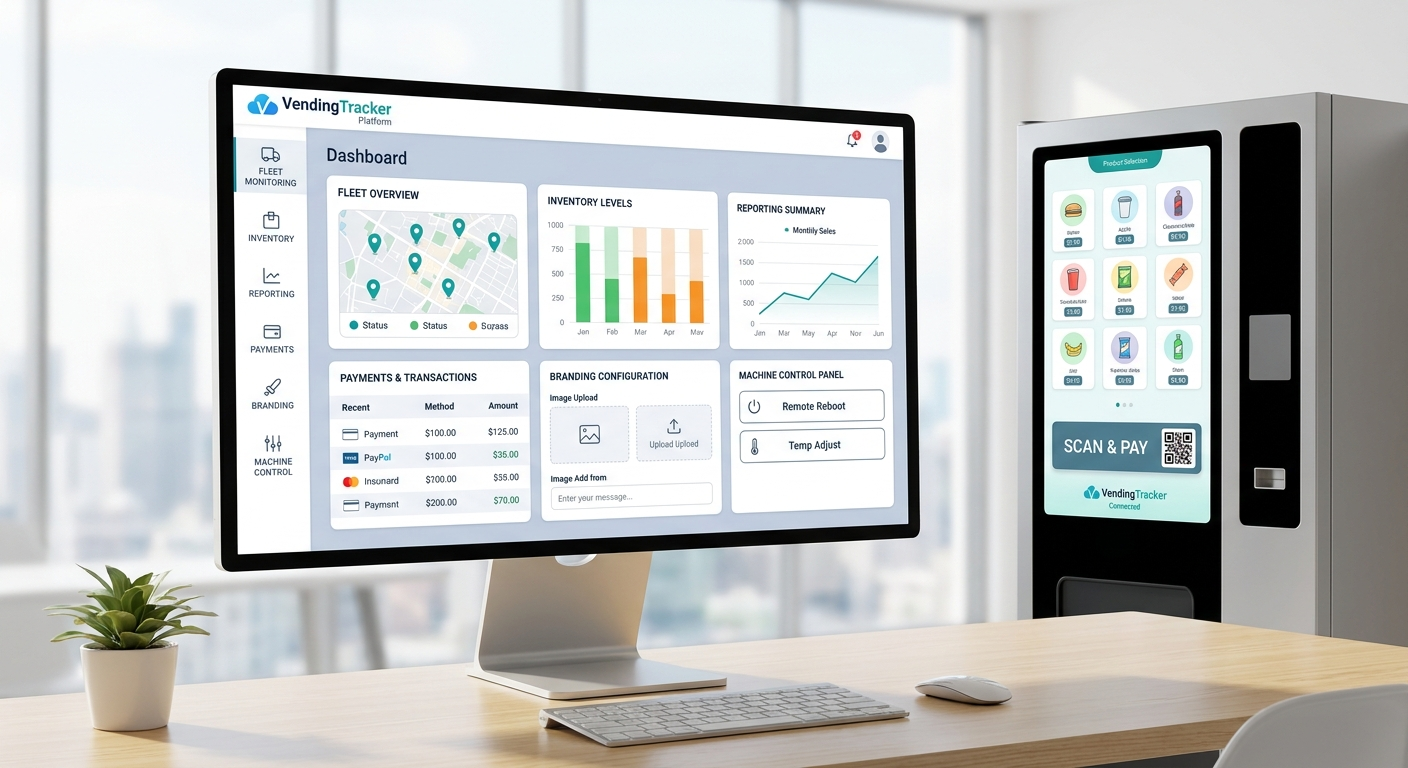
Custom development around VendingTracker can include machine UI work, mobile apps, cloud features, integrations, reporting layers, and deployment-specific workflow logic where the standard product path is not enough.
The useful question is not whether a buyer wants something custom. The useful question is which part of the vending workflow needs to behave differently, who owns that workflow, and whether the result should stay private or become part of the broader platform.
Some projects need a branded touchscreen flow on the machine. Others need a technician or operator app. Others need a private cloud feature, a custom dashboard, or a workflow that sits between the machine and a third-party system.
Those are different surfaces, but they often belong to the same commercial problem. Treating them as one scoped software conversation usually produces a better result than pretending the machine, the app, and the cloud workflow are unrelated.
The video below shows the machine-side software in proper landscape format, giving buyers a cleaner view of the Android-based interface and the platform layer custom development can extend.
Branded shopper experiences, custom navigation, machine-specific UX, guided purchase flows, or regulated interaction steps tied to the deployment.
Operator, technician, field-service, or end-user app workflows that support replenishment, troubleshooting, approvals, alerts, or customer interaction.
Private reporting, business rules, admin tooling, API extensions, dashboard views, integrations, or workflow logic that needs to live in the platform layer.
Not every request should become a platform feature, and not every request should stay private forever. The right answer depends on how broadly useful the capability is, what commercial value it creates, and whether the workflow is part of a repeatable product path or a customer-specific requirement.
That is why VendingTracker development requests usually fall into three clear paths rather than one vague bucket labelled custom work.
If a requested capability has broad value across operators, OEMs, or deployment types, it can be developed into the shared product and supported as part of the wider VendingTracker roadmap.
If a customer has a stronger time-sensitive need for a feature that still has broader platform value, the work can be prioritised commercially while still landing inside the shared product set.
If the workflow needs to remain customer-specific, partner-specific, or commercially exclusive, the work can be scoped as private development rather than rolled into the global feature set.
The strongest custom projects usually start with a clear deployment constraint, a real workflow need, or a commercial reason the standard path is not enough.
This is not about inventing software for sport. It is about solving a real machine, operator, OEM, or programme requirement with the right level of product discipline.
The scoping conversation starts with the business goal, the machine environment, the workflow that needs to change, and who needs to own the result after launch.
That keeps the work grounded in real deployment value rather than loose feature wish lists. It also makes it easier to decide whether the right answer is shared roadmap work, a sponsored feature, or a private build.
VendingTracker custom development is framed as an extension of a vending software platform, not as a generic dev-shop offer floating free of the product.
That matters because machine constraints, payment paths, compliance requirements, field operations, and rollout support all change what a sensible build actually looks like.
The aim is to be flexible without being careless. Good product discipline matters even when the scope is customer-specific.
Use the next pages below when the conversation needs to move from a generic feature request into the right product, OEM, or integration lane.
Yes. If a capability needs to stay customer-specific or partner-specific, it can be scoped as private or exclusive development rather than being added to the wider product.
Yes. If the feature has broader value across operators, OEMs, or deployment types, it may be developed as a shared platform capability rather than a one-off branch.
The best-fit projects usually involve machine UI, mobile operator workflows, cloud features, reporting layers, integrations, or deployment logic that is commercially important and too specific for a generic feature path.
Usually yes. The useful starting point is the real machine environment, workflow requirement, and business objective rather than a vague request for something custom.
Yes. OEM or strategic partner projects can be scoped with exclusive development where that commercial model makes more sense than adding the capability to the shared roadmap.
Review the machine, app, cloud, or workflow requirement with DMVI and decide whether the right path is shared roadmap work, a sponsored feature, or a private build.